

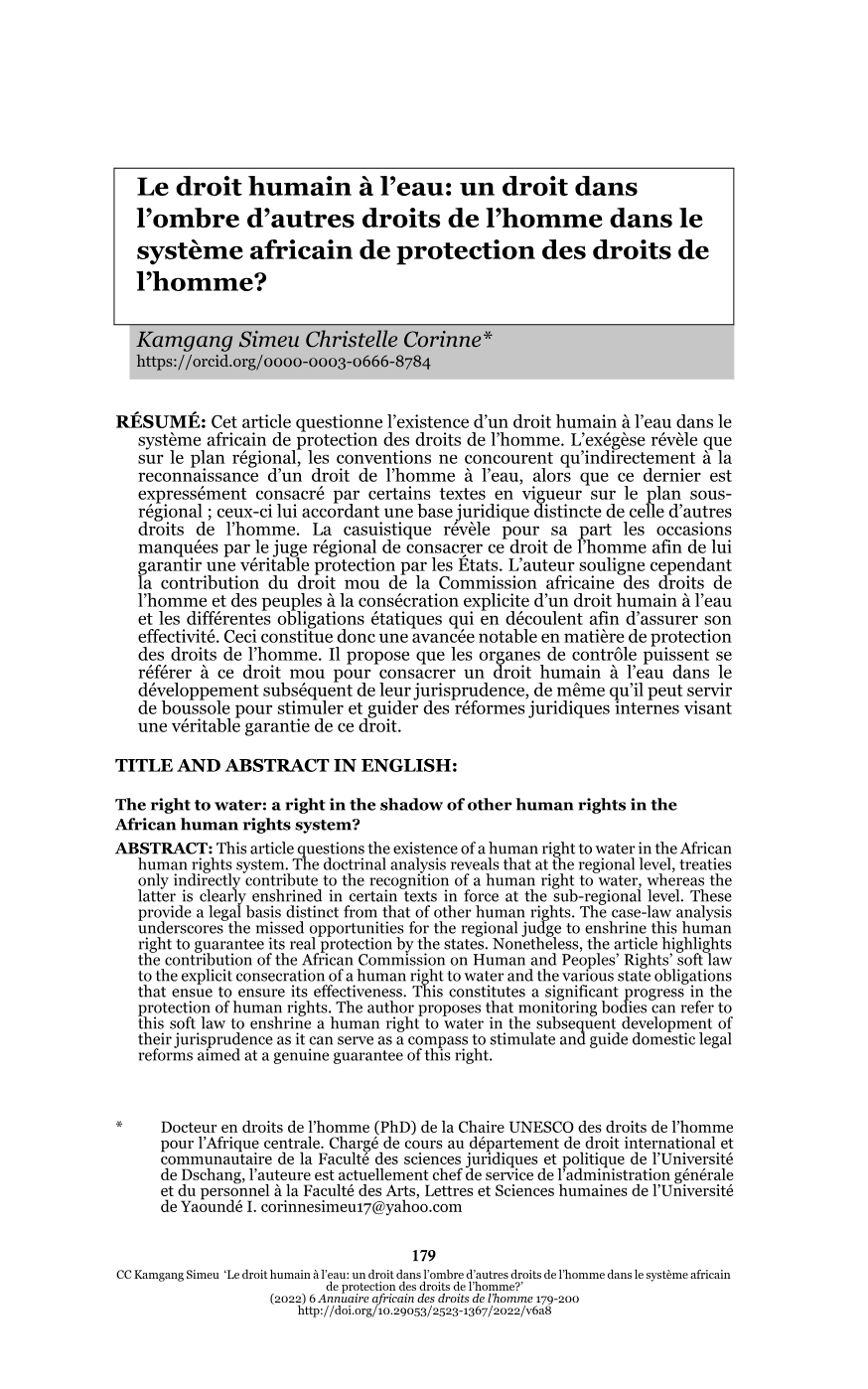
Cet article examine la reconnaissance du droit humain à l’eau au sein du système africain de protection des droits de l’homme, face aux défis persistants d’accès à l’eau potable sur le continent. Il questionne son statut, souvent implicite, et les obligations étatiques qui en découlent. L’étude combine une exégèse des conventions régionales et sous-régionales avec une analyse casuistique de la jurisprudence, évaluant également l’impact du droit mou de la Commission africaine des droits de l’homme et des peuples. Les résultats montrent une consécration textuelle indirecte au niveau régional, mais plus explicite au niveau sous-régional. L’article souligne les occasions manquées par le juge régional, tout en valorisant la contribution du droit mou de la Commission africaine pour une reconnaissance claire et l’établissement d’obligations étatiques, proposant son usage pour guider les réformes juridiques internes.
This article investigates the recognition of the human right to water within the African human rights system, addressing persistent challenges in accessing safe drinking water across the continent. It questions its often implicit status and the resulting state obligations. The study employs an exegesis of regional and sub-regional conventions alongside a casuistic analysis of jurisprudence, also assessing the impact of the soft law developed by the African Commission on Human and Peoples’ Rights. Findings indicate indirect textual recognition at the regional level but more explicit acknowledgment sub-regionally. The article highlights missed opportunities by regional courts while emphasizing the African Commission’s soft law contribution to clear recognition and the establishment of state obligations, suggesting its use to guide domestic legal reforms.
Share with my friend :
Avis
Il n’y a pas encore d’avis.