
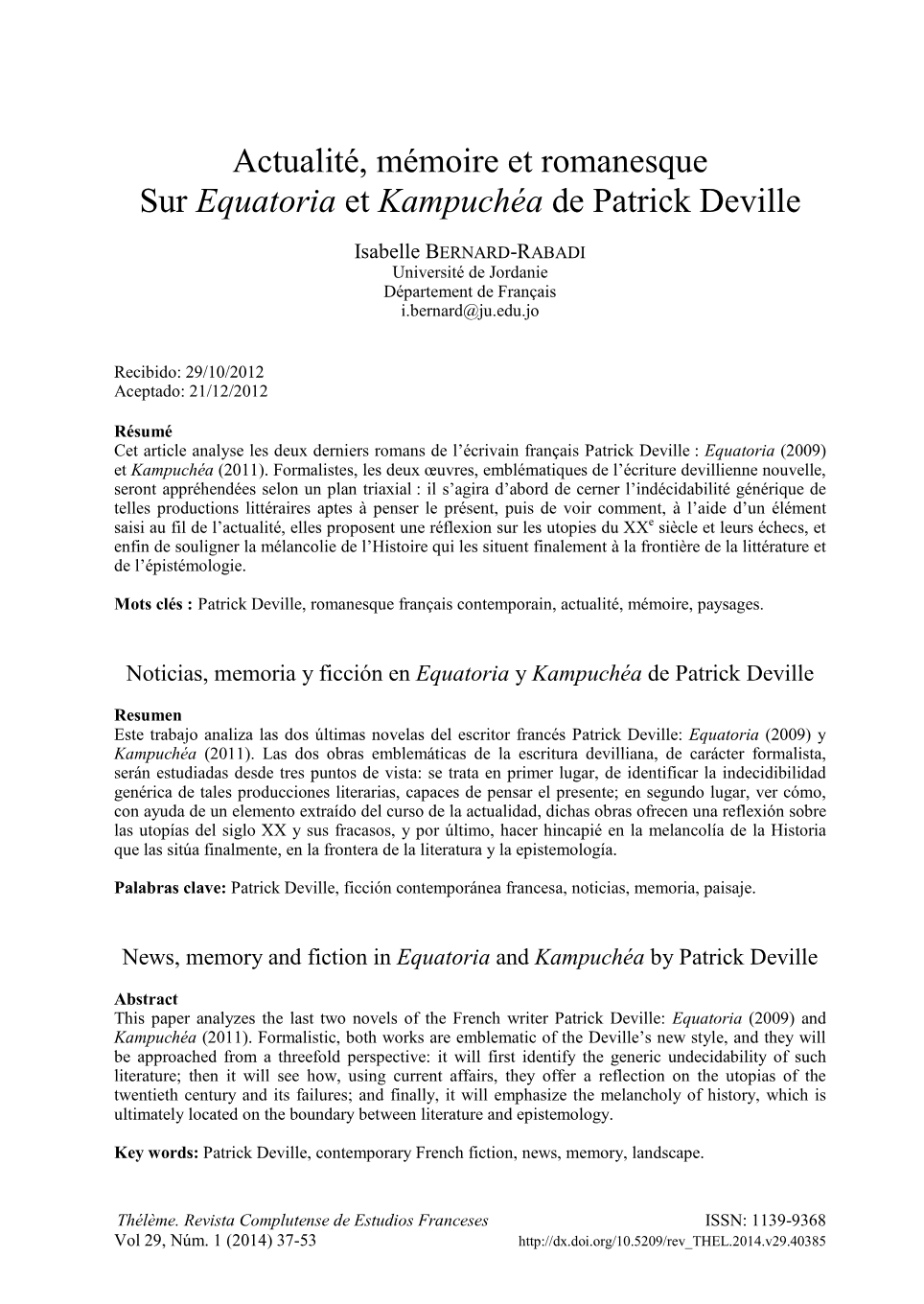


Cet article analyse les romans Equatoria et Kampuchéa de Patrick Deville, emblématiques de son écriture nouvelle, pour leur capacité à penser le présent et les utopies du XXe siècle. L’étude adopte une approche triaxiale, examinant l’indécidabilité générique des œuvres, leur réflexion sur l’actualité et l’Histoire, et leur position à la frontière de la littérature et de l’épistémologie. Elle révèle comment Deville mêle méditations existentielles, documents historiques et récits de voyage pour dépeindre le monde et ses convulsions, offrant une relecture profonde du passé à l’aune du présent.
This article analyzes Patrick Deville’s novels, Equatoria and Kampuchéa, emblematic of his new writing style, for their ability to reflect on the present and 20th-century utopias. The study employs a triaxial approach, examining the generic undecidability of the works, their reflection on current events and history, and their position at the intersection of literature and epistemology. It reveals how Deville blends existential meditations, historical documents, and travel narratives to depict the world and its upheavals, offering a profound reinterpretation of the past through the lens of the present.
Share with my friend :


Avis
Il n’y a pas encore d’avis.